
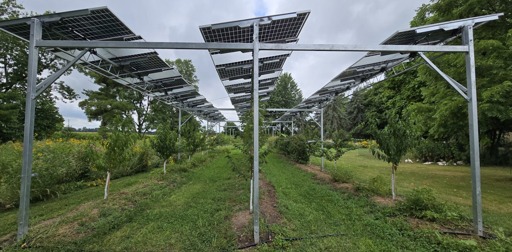
Studies from all over the world have shown crop yields increase when food crops are partially shaded with solar panels. Agrivoltaic yield increases are possible because of the microclimate created underneath the solar panels that conserves water and protects plants from excess sun, wind, hail and soil erosion. The temperatures are cooler, milder and all around more pleasant for plants.
Last year, we found that you could increase strawberry yield by 18 per cent under solar panels compared to strawberries in an open field. This agrivoltaic crop yield bump has been shown for dozens of other crops and solar panel combinations all over the world, including basil, broccoli, celery, corn, grapes, kale, lettuce, pasture grass, peppers, potatoes, tomatoes and more.
Our new study shows that the microclimate that benefits plants beneath agrivoltaics is maintained even when the solar is not generating any electricity.
We analyzed the lifespans of key agrivoltaic system components, experimentally measuring microclimate impacts of two agrivoltaic arrays. The results showed agrivoltaics still benefit crops even when unpowered.
Running power lines locally is likely a pain, but not an insurmountable one when the “local” is your next door neighbors. id expect its both harder and easier rural. Bigger distances and almost no infastructure, but there tend to be less permits, and more people who do manual labor and have heavy duty equipment on hand to trench if needed.
If you really work on it interconnecting neighbors, you could have the first group connect to their neighbors after adding their own panels, on and on. If youre trenching power, I would slap in some fiber in its own conduit as well. Get an ISP going while youre at it.